
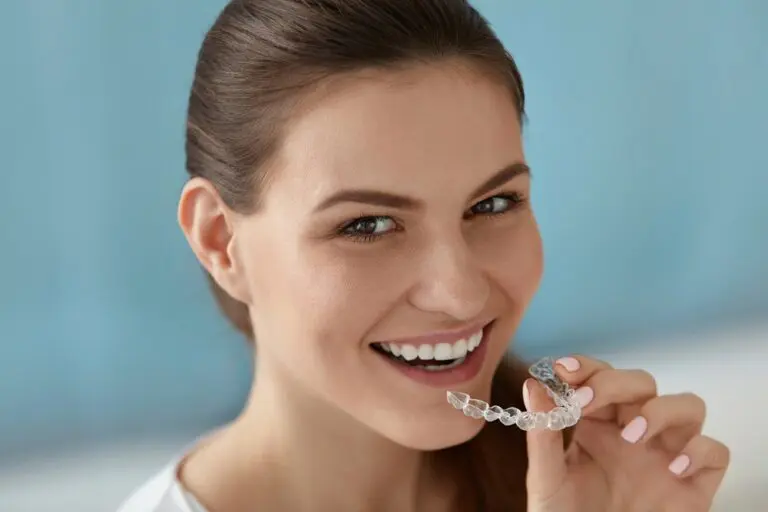
Moving a tooth with an aligner tray isn’t just about pushing it in the right direction. Every action needs something to push against, and for some movements, the other teeth in the arch don’t provide enough resistance on their own to hold everything else in place while one tooth moves. This is where anchorage becomes a real engineering question, and for the most demanding cases, where a small titanium anchor placed directly in the bone can make a movement possible that trays alone couldn’t achieve.
If you’re asking how does Invisalign work in Overland Park, KS: a digital scan plans your entire treatment, then a series of custom clear trays applies gentle, staged pressure to move specific teeth, worn 20 to 22 hours daily and switched every one to two weeks. For certain movements, the tray system needs a stable point to push against beyond just neighboring teeth, which is why temporary anchorage devices, small mini-implants placed in the bone, are sometimes used alongside Invisalign for more demanding cases.

Why Movement Needs Anchorage, Not Just Force
When an aligner tray pushes a tooth toward its target position, the reaction force has to go somewhere. Ordinarily, that reaction is absorbed across the other teeth in the arch, which act collectively as an anchor holding everything else steady while one or a few teeth move. This works well for many cases, since the combined resistance of a full arch of teeth is usually sufficient.
Some movements ask more of this system than the natural anchorage of neighboring teeth can reliably provide, particularly cases needing to close significant space or move a group of teeth a longer distance without the anchor teeth also drifting unintentionally in the process. When this happens, the plan needs a more stable, dedicated anchor point than borrowed resistance from nearby teeth.
When Temporary Anchorage Devices Enter the Picture
Temporary anchorage devices (TADs) are small titanium screws placed directly into the jawbone, providing a fixed point that doesn’t move at all, unlike a tooth, which is always somewhat responsive to force. When a case needs more anchorage than the natural arch can reliably supply, elastics or attachments can connect the aligner system to a TAD instead of relying entirely on neighboring teeth, giving the movement a stable point to pull against.
TADs are placed with local anesthetic in a brief in-office procedure and removed once they’re no longer needed. They’re a genuinely different tool than the tray itself, addressing the anchorage side of the biomechanics rather than the movement side.
Why This Matters for What Invisalign Can Actually Treat
This is part of why the range of cases treatable with aligners has expanded considerably over the past decade. Cases that once required braces, or even surgery, specifically because trays alone couldn’t provide sufficient anchorage for the needed movement, can sometimes be managed with Invisalign when TADs are added to the plan. This doesn’t mean every complex case becomes an aligner case; some movements and skeletal discrepancies still require braces or a surgical approach regardless of available anchorage tools. But it does mean the anchorage question, not just the visible complexity of a case, is part of what determines whether Invisalign can achieve a specific result.
Dr. Fateh Arslan, an orthodontist at Fiesta Orthodontics in San Antonio, TX, notes that fixing significant bite and alignment issues, the kind that sometimes require this level of anchorage support, isn’t just about appearance, since these corrections can also reduce jaw pain and improve how the whole bite functions together.
How the Digital Planning Ties Anchorage Into the Overall Plan
A 3D scan of your teeth and bite feeds into treatment-planning software that maps the full sequence of movements, including which teeth serve as anchors for which stages and whether a TAD is needed for any specific part of the plan. This is decided before treatment starts, not improvised partway through, since anchorage needs are part of what the initial biomechanical planning has to account for.
Living With Invisalign
Trays come out for eating and drinking anything but water, and cleaning them with a soft brush and cool water keeps them clear. Wearing them 20 to 22 hours daily is what keeps the whole plan, anchorage included, progressing on schedule.
Monitoring Your Progress
Visits every few weeks confirm your teeth, and any anchor points involved, are tracking with the original plan. If a TAD is part of your case, its position is checked at these visits as well, alongside your teeth’s progress.
Frequently Asked Questions
Do most Invisalign patients need a TAD?
No. Most cases have sufficient natural anchorage from the surrounding teeth and don’t need one. TADs are reserved for more complex cases where a specific movement requires more stable anchorage than the arch can reliably provide on its own.
Is getting a TAD placed painful?
The placement procedure uses local anesthetic and is generally well-tolerated, similar to a minor dental procedure. Most patients report only mild soreness afterward.
Does needing a TAD mean my case is unusually complicated?
It means a specific movement in your plan needs more anchorage than nearby teeth alone provide, which is a technical detail about that particular movement, not necessarily a sign of overall case severity.
Can a TAD be used with braces too, not just Invisalign?
Yes, TADs are used with both fixed and removable appliance systems whenever a case needs more anchorage than the surrounding teeth can supply.
Sources. General principles of orthodontic anchorage and temporary anchorage device (TAD) biomechanics; clinical and administrative observations from Lenius Orthodontics, Overland Park, KS.

Related Reading
- Braces for Overbite in Overland Park, KS
- How Long Do Braces Take in Overland Park, KS
- Invisalign vs Braces
Find Out If Your Case Needs Extra Anchorage Support
Lenius Orthodontics evaluates whether your specific movements can be achieved with standard anchorage or would benefit from a TAD as part of a complete Invisalign treatment plan.
Schedule Your Free Consultation
Free consultation for new patients.