


Orthodontic braces help align and straighten teeth by gently applying controlled pressure. They are designed to gradually shift teeth into their ideal positions. This thorough guide outlines the various types of braces available, their primary features, and who they’re most suitable for.
All Types of Braces in Overland Park, KS

Clear Aligners such as Invisalign
A modern approach to orthodontics that uses transparent, custom-made aligners to gently straighten teeth.
Components
Custom-made clear aligners or trays.
Advantages
Nearly invisible, removable for eating and cleaning.
Considerations
Requires commitment to wearing them regularly and isn’t ideal for severe dental cases.
Metal Braces
Metal braces use durable brackets and wires, providing a reliable solution for correcting difficult misalignments. Though more noticeable, they’re effective and budget-friendly with great results.
Components
Metal brackets, archwire, rubber bands.
Advantages
Effective for severe misalignments, cost-effective.
Considerations
Highly visible, can feel uncomfortable at first.


Ceramic Braces
Ceramic braces use clear brackets, offering a discreet alternative to metal braces. They look more appealing but require careful handling to prevent staining or damage.
Components
Ceramic brackets, archwire, optional rubber bands.
Advantages
Aesthetic appeal, nearly invisible.
Considerations
More fragile than metal braces, may stain.
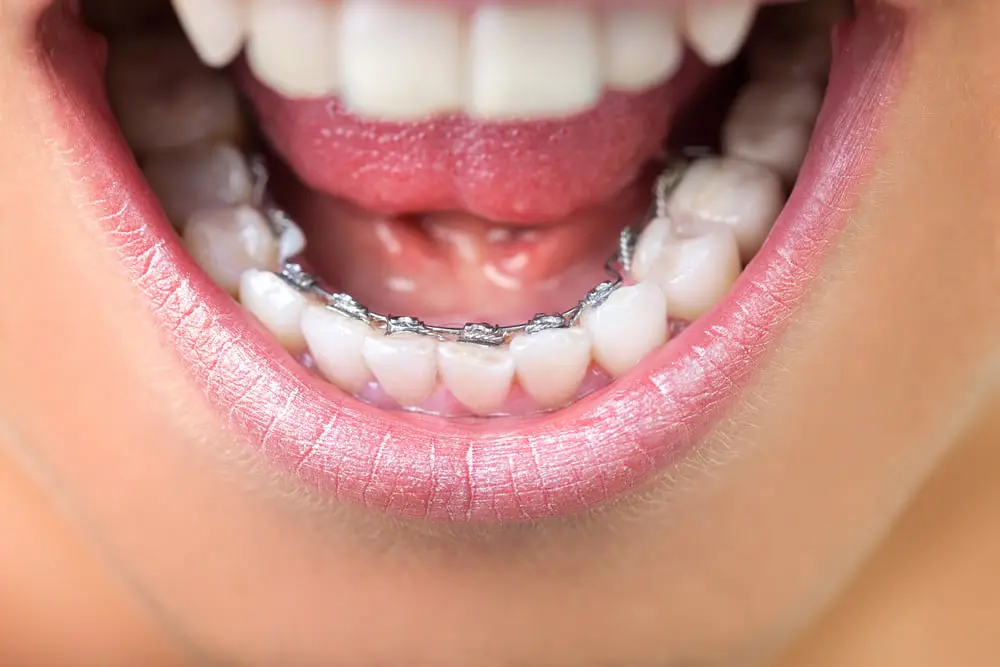
Lingual Braces
Lingual braces are placed on the inside surface of the teeth, offering a completely concealed orthodontic solution.
Components
Custom-made brackets, archwire.
Advantages
Invisible from the front, effective for complex cases.
Considerations
It may take time to adjust speech, and cleaning requires extra effort.
Considerations for Different Age Groups